The Amazon of the ocean: Ocean Rainforest and the great seaweed surge
In the cold, turbulent waters of the North Atlantic, a fundamental realignment of the global bio-economy is taking place in the ocean. While the world looks to land-based forests to solve the carbon crisis, the Faroese company named Ocean Rainforest is looking to the "Amazon of the Ocean", the vast, fast-growing kelp forests that have the potential to sequester carbon, support marine ecosystem recovery, and revolutionize the global supply chain.
By moving seaweed cultivation from sheltered bays to the high-energy environment of the exposed ocean, Ocean Rainforest is transforming the production of macroalgae in Europe from a niche health food into a critical pillar of a more circular, land-sea economy. The towering kelp canopies hold the potential to scrub carbon from the atmosphere, restore marine chemistry, and fortify the world’s exhausted topsoil.
Engineering the Underwater Forest
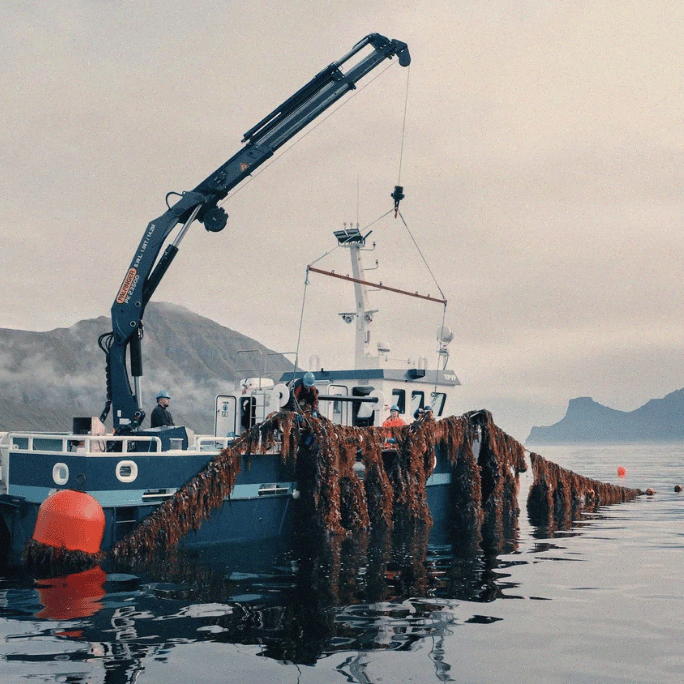
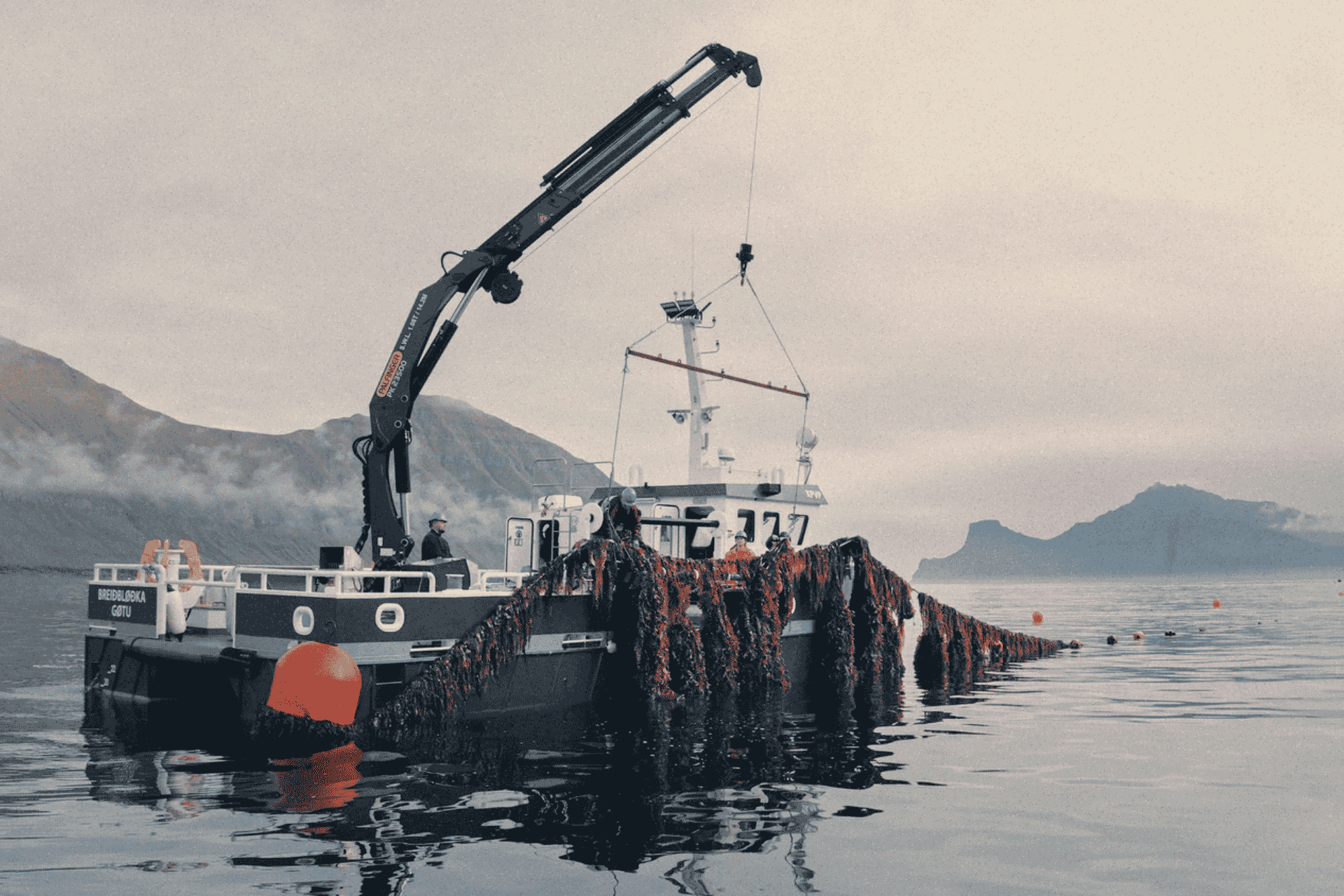
Seaweed cultivation is ancient, but scaling it to a level that impacts the global climate requires moving away from the "oceanic trial-and-error" of traditional coastal farming. Ocean Rainforest’s breakthrough is their proprietary OCU (Ocean cultivation Unit). Unlike standard seaweed lines that often snap in heavy storms, the OCU is a deep-water, tension-leg structure designed to survive the brutal 15-meter waves of the Faroe Islands.
This engineering allows the company to cultivate kelp in the nutrient-rich, deeper waters of the open sea, where growth rates can be significantly higher. By utilizing much of the upper water column, they are effectively building a vertical underwater forest. These kelp "trees" can display exceptional growth rates under optimal conditions, approaching tens of centimetres per day, absorbing significant amounts of CO2 and nitrogen from the water, which helps mitigate ocean acidification and local "dead zones" caused by agricultural runoff.
.png)
Measuring impact: From ocean to field
For Ocean Rainforest, the true measure of impact lies in their "Ocean to Field" philosophy. A central pillar of their business is the production of high-performance agricultural biostimulants and organic fertilizers. These products are designed to solve a dual crisis: the degradation of land-based soil and the pollution of the seas. By applying seaweed-based biostimulants to high-value crops, ranging from California grapes to strawberries and avocados, farmers can significantly reduce their reliance on synthetic nitrogen fertilizers.
The "fertilizer savings" impact is quantifiable; Ocean Rainforest even provides a calculator for farmers to track how their seaweed inputs lower their carbon footprint and freshwater usage. Beyond the soil, the company measures its "cascading benefits" through methane-reduction in cattle feed. Research into specific seaweed-derived feed additives has demonstrated the potential to significantly reduce methane emissions from livestock. Finally, their offshore rigs act as artificial reefs, providing habitat for juvenile fish and creating a "halo of life" in previously empty stretches of ocean.
The data challenge: Tracking the invisible sink
Despite the technical promise, Ocean Rainforest faces significant hurdles in capturing the precise impact of their underwater forests. The primary challenge is the "carbon accounting" of the deep sea. While it is easy to model how much carbon a kelp plant absorbs while growing, and directly measurable how much carbon is removed when harvested, it is far more difficult to quantify the amount and permanency of passive deposition during growth, and ultimately how much carbon remains permanently sequestered once the biomass is processed into fertilizer or feed.
Current oceanographic models are often too broad to account for the localized impact of a single farm, leaving a data gap that prevents the full monetization of seaweed-based carbon credits. Ocean Rainforest collaborates actively with research institutions, such as Stanford and Cambridge universities, looking at the biochemical effect of kelp cultivation on the water column as well as the effect of biomass deposition on the seabed around the OCU. These projects aim to plug the data gap and enable significantly improved modelling fidelity.
Additionally, measuring the "net biodiversity gain" requires constant, high-tech underwater monitoring, often using autonomous visual data systems, to distinguish between transient fish populations and permanent ecosystem recovery.
.png)
Scaling the future: Seaweed-as-an-Industry
The scaling opportunity for Ocean Rainforest is tied to a shift from boutique harvesting to industrial-scale biorefining. In recent years, the company has expanded its operations from the Faroe Islands to the Pacific coast of California and Mexico, proving that its high-energy cultivation units can be adapted to different maritime environments. Backed by strategic funding, they are now developing high volume, automated or mechanised technologies for each step of the value chain, designed to handle the massive volumes required by growing international demand.
Seaweed cultivation, however, faces a structural scaling paradox. Today’s global biostimulant and seaweed extract industries are still overwhelmingly dependent on inexpensive wild-harvested biomass, creating direct price competition for cultivated seaweed. As a result, offshore cultivation must achieve commercial relevance before large-scale market adoption can occur, yet the economies of scale needed to reduce production costs are themselves dependent on that market demand already existing. This dynamic remains one of the sector’s greatest barriers to growth.
.png)
Compounding the challenge is a regulatory landscape that was largely developed around traditional wild-harvest supply chains. While frameworks for seaweed-derived fertilizers and biostimulants are relatively mature in both Europe and North America, cultivated offshore biomass often falls into regulatory grey zones, requiring lengthy validation and approval pathways before products can enter established agricultural markets. For individual companies, the financial and administrative burden of opening these pathways can be prohibitive.
For Ocean Rainforest and the wider sector, the implication is clear: realizing the climate and industrial potential of seaweed cultivation may require more than technological innovation alone. Without coordinated policy support, clearer regulatory frameworks, and early-stage market incentives, it may prove difficult for the industry to generate the demand needed to unlock true industrial scale and the environmental impact that follows from it.
By transforming seaweed into everything from bioplastics to soil-regenerating fertilizers, Ocean Rainforest is ensuring that the "Amazon of the Ocean" is no longer a hidden resource, but a verified engine of the new blue economy.