The silent revolution beneath the waterline: Hullbot’s quest for frictionless shipping
For a ship, the ocean is not merely a medium for travel; it is a living ecosystem that relentlessly attaches itself to every submerged surface. This process, known as biofouling, begins as a microscopic "slime" layer and rapidly escalates into a dense carpet of barnacles, tubeworms, and algae. For the maritime industry, this is more than an aesthetic nuisance. It is a massive economic and environmental drag that increases fuel consumption and carbon emissions, increasing emissions up to 25%.
Hullbot was founded in Sydney in 2017 to design, build, and operate an autonomous robotic solution that keeps vessels slime-free year-round. This addresses one of the shipping world’s most persistent challenges and is one of the fastest ways to reduce global emissions by more than 1%.
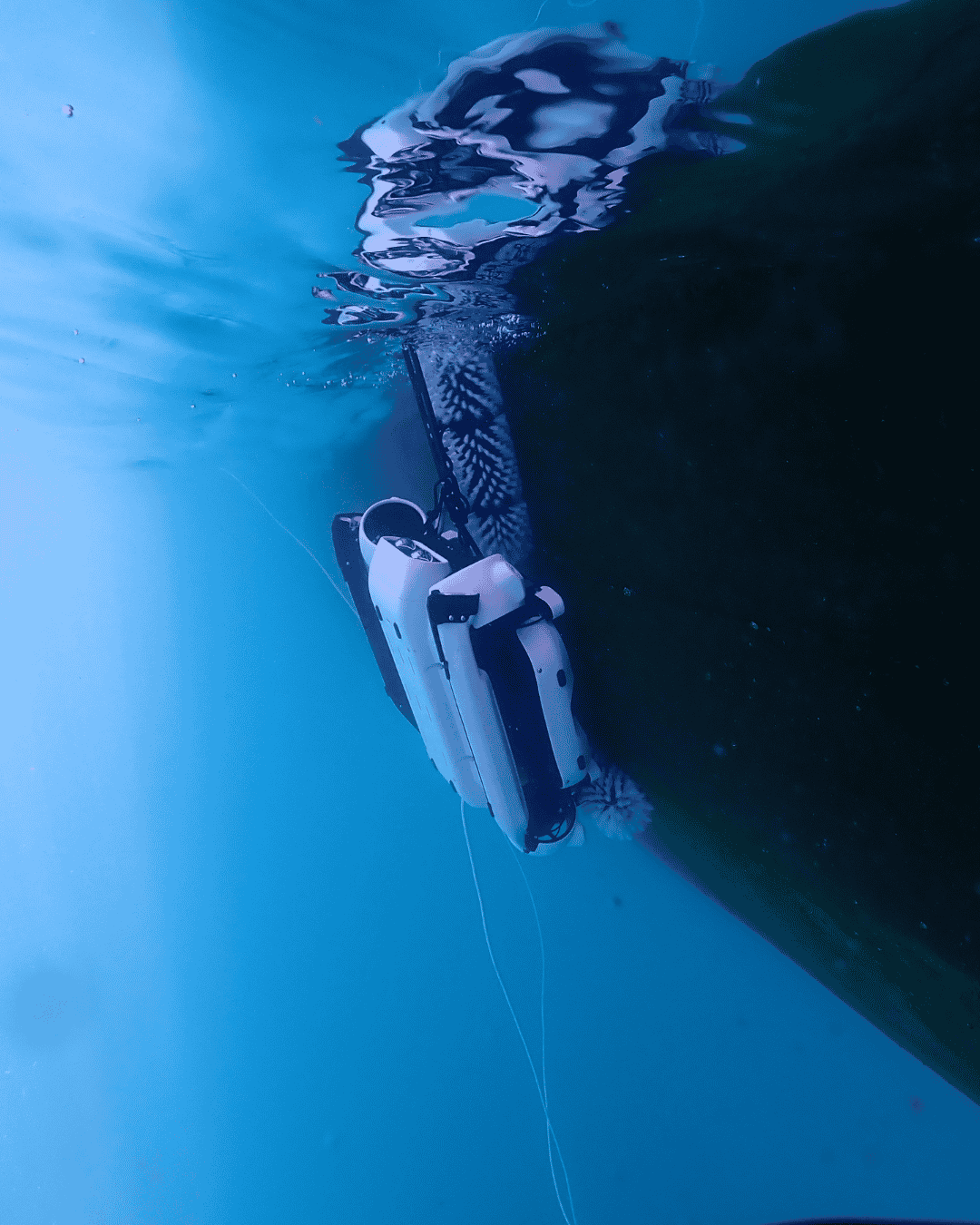
Proactive grooming: Keeping a clean hull clean
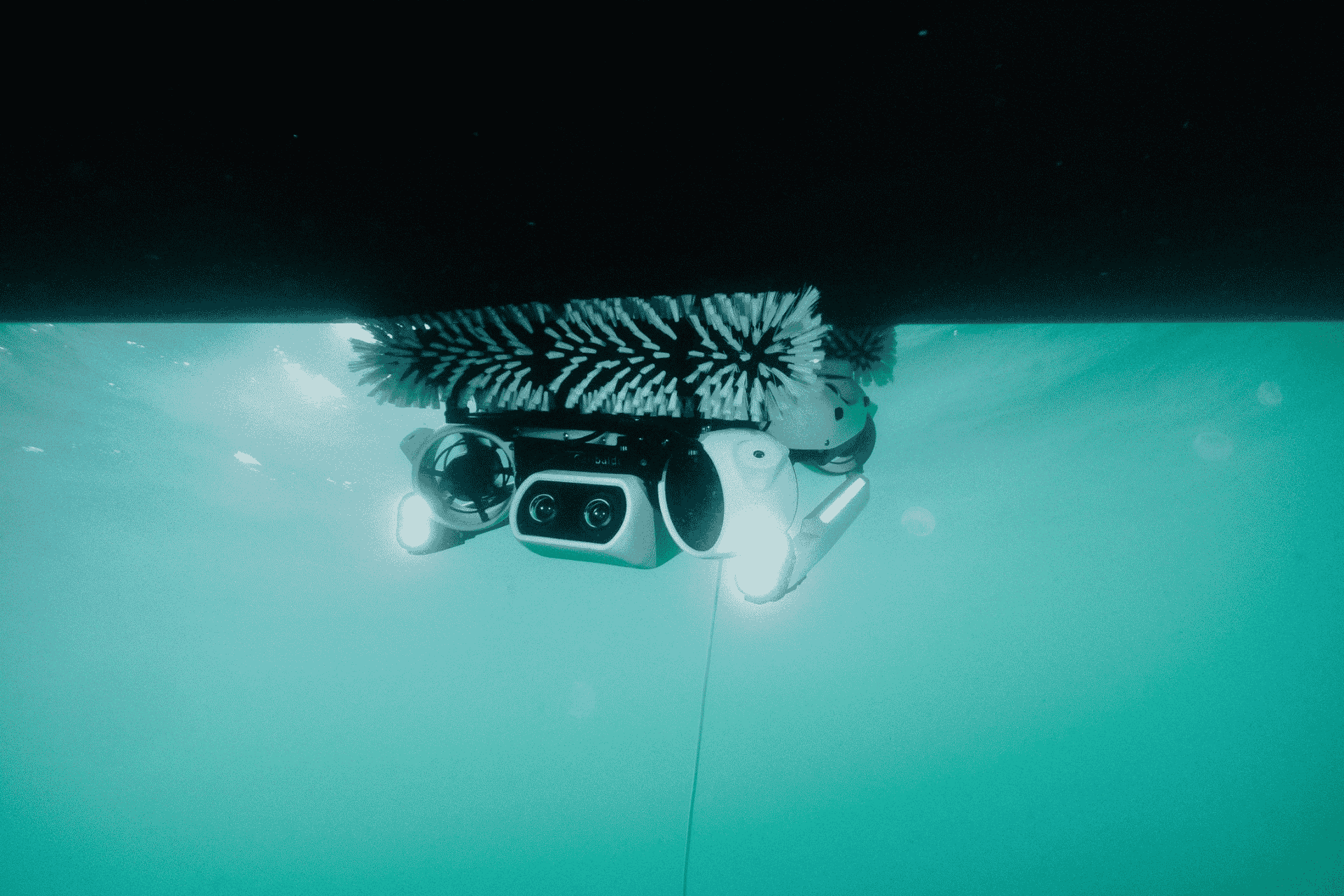
Historically, hull cleaning has been a reactive event where a vessel waits until it is heavily fouled before deploying divers or aggressive mechanical scrubbers. These traditional methods are often destructive, stripping away expensive anti-fouling coatings and releasing microplastics and invasive species into local ports. Hullbot’s approach is fundamentally different because it relies on "proactive grooming," which means the robots clean early and often. By using soft, gentle brushes and autonomous systems, the robots remove the early microfouling without damaging the vessel’s protective coating, keeping hulls in the best conditions all year round.
Hullbot's hardware is proprietary and patent-protected, integrated with machine vision that improves with every clean. The system operates using onboard cameras and computer vision to navigate complex hull geometries. The robots can clean 100% of the vessel, including niche areas and complex geometries such as rudders and propellers. The systems are installed on vessels, and conduct grooming whenever the vessels are stationary.
Impact intersection of shipping efficiency, decarbonization, and ocean health
Environmental regulation is tightening. The IMO's Carbon Intensity Indicator and EU Emissions Trading System have made hull performance a direct financial liability for shipowners. Clean hulls are no longer just good practice. They are a compliance requirement and a financial necessity.
Hullbot tracks fuel savings and emission reductions across all vessel types, with validated reductions of up to 26% in greenhouse gas emissions. To date, this translates directly to millions of kilograms of CO2e avoided per year. This impact will grow orders of magnitude as Hullbot ramps up to clean bigger ships.
Beyond carbon reduction, proactive grooming is also an enabler for healthier antifoulings, reducing the need for biocide-heavy and microplastic-releasing coatings. Antifouling paint is a significant and historically overlooked source of ocean microplastics. Furthermore, by preventing the transition from microfouling to macrofouling, the system also serves as a vital tool in biosecurity, stopping the transfer of invasive aquatic species between ecosystems, which remains a primary driver of global biodiversity loss.
.png)
The challenge of the "invisible" culprit: Measuring impact in a data-driven era
Measuring hull performance is complex. Many variables affect fuel consumption, making it hard for ship operators to understand and to isolate the impact of a clean hull from other variables. The problem is compounded by what could be called the microfouling paradox. A slime layer just 0.5mm thick can increase fuel consumption by up to 25%, yet it is too thin to be detected by traditional sensors or flagged during standard inspections.
Hullbot removes that uncertainty. Fuel analysis is built into the service, comparing vessel performance before and after switching from conventional diver cleaning to Hullbot. The results are based on real operational data and baselines, not modelled estimates.
Hullbot consistently shows fuel savings averaging 15% and up to 26% across global fleets.
.png)
Driving decarbonisation through design
The scaling opportunity for Hullbot is vast, supported by a "Robot-as-a-Service" (RaaS) model that eliminates high upfront hardware costs for shipowners. By replacing capital expenditure with a subscription for guaranteed hull performance. Hullbot has already cleaned 82 vessels across the US, EU, and Asia-Pacific, currently averaging more than 100 cleans per month, cutting operating costs and emissions across fleets globally. The flexibility of the RaaS model allows for rapid deployment without disrupting existing vessel schedules.
Backed by a $16 million Series A funding round in late 2025, the company is now accelerating its global rollout into high-volume commercial shipping. The transition to a "clean-by-design" operational model represents a major shift in maritime philosophy. It is moving from a cycle of neglect and repair to a future of constant, data-driven optimization. By ensuring that the world’s vessels move through the water with the least possible resistance, Hullbot is proving that the path to a sustainable ocean begins right at the waterline.
Download the 2025 Impact Report
.png)