.png)
The future of transportation: Efficiency now, fuel flexibility for what comes next
Maritime decarbonization remained one of the most commercially active blue economy themes in 2025, driven by regulation, fuel uncertainty, customer pressure, and the growing cost of inaction.
FuelEU entered into force in Europe, the IMO’s Net-Zero Framework advanced in discussions, despite a one-year delay, and shipowners continued preparing for a future in which carbon intensity, fuel choice, and operational efficiency directly affect asset value. This created demand for both near-term retrofit solutions and longer-term zero-emission pathways, with asset owners recognizing the eventuality of a net-zero future, and investing today for this transition.
Presently, a majority of new-builds in the global fleet, all of which are anticipated to be in operation for decades, are being built with the flexibility to operate on hybrid fuel sources, or with the ability to integrate fuel-reducing technologies such as wind or electric propulsion into their operating stacks. For many, these alternatives have simply become an attractive, cost-saving, redundancy measure, especially as fossil sources continue to skyrocket in price due to geopolitical unrest.
In 2025, the most attractive startup opportunities were in technologies that could readily assist in this transition, working with today’s fleet while preparing for tomorrow’s fuels. Wind propulsion, electrification, alternative fuels, onboard carbon capture, and autonomous vessels each advanced in 2025, but with different adoption timelines.
The clearest commercial pull is for solutions that reduce fuel consumption, improve compliance, and avoid major disruption to vessel operations, while larger bets on autonomy and fuel transition continue to be shaped by infrastructure, safety, and regulatory readiness.
.png)
Alternative Fuels
It was an interesting year for alternative fuel adoption, which became decidedly more pragmatic in 2025. DNV reported 275 alternative-fuel vessel orders on the year, down 47% from 2024 amid a broader newbuild slowdown, but alternative-fuel vessels still represented a meaningful share of new contracting. LNG dominated with ~67% of alternative-fuel orders, followed by methanol at ~20%. Ammonia and hydrogen remained limited at five and four orders, respectively, but infrastructure development and production cost reduction seem to be driving long-term interest. From a regulatory perspective, FuelEU Maritime’s full application from January 2025 strengthened the market pull, but the IMO Net-Zero Framework delay added uncertainty. Broadly, shipowners are increasingly prioritizing fuel flexibility and dual-fuel readiness rather than betting on a single winning molecule.
Wind Propulsion
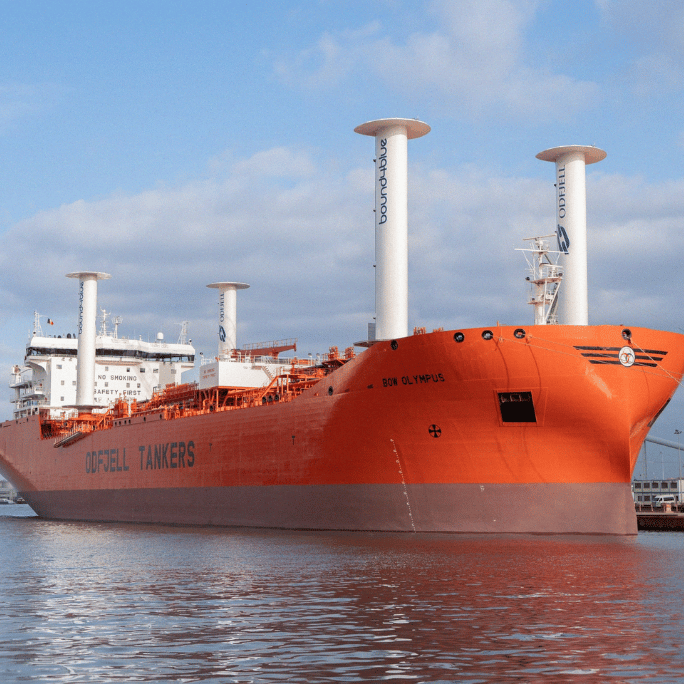
Wind propulsion entered 2025 as one of shipping’s most bankable near-term efficiency solutions, continuing its transition from niche technology to validated cost-saving tool. Rotor sails, suction sails, rigid sails, and other wind-assisted systems are now being installed on larger commercial vessels, with adoption being driven by FuelEU Maritime, CII pressure, high fuel-cost volatility, and the appeal of fuel savings without waiting for alternative fuel infrastructure. The best-positioned companies are proving rapid installation, reliable savings, and clear ROI across vessel classes, with multi-year commercial deployments under their belt that have validated all of the above for a market moving rapidly towards a real inflection point of mass adoption. From a fundraising perspective, bound4blue closed a $44M round in December 2025 backed by maritime corporates, ship-owning families, climate investors, and government capital, with proceeds aimed at industrialising suction sails and scaling manufacturing to hundreds of units annually.
.png)
Electrification
Maritime electrification gained momentum in 2025, scaling fastest in ferries, short-sea routes, ports, tourism, and fixed-route vessels where charging infrastructure is manageable and routes are predictable. The launch of large battery-electric ferry projects demonstrated that electrification is moving beyond small vessels, but grid capacity, charging speed, battery weight, and capex remain limiting factors. Additionally, while the latter technically closed in January 2026, Echandia’s $30M round and Fleetzero’s $43M Series A each signaled an ongoing push for electric propulsion in larger shipping vessels, where battery technology has become sophisticated enough to handle shorter routes.
Autonomous Vessels
Autonomous vessels saw one of the strongest 2025 funding signals in the blue economy, with Saronic raising a $600M Series C in February 2025 at a $4B valuation, quadrupling its valuation in seven months and funding its “Port Alpha” autonomous shipyard initiative. With this round and others, the market is undeniably being pulled strongest by defense applications, though customers in the commercial sectors are also in the mix, where autonomy can reduce crew risk, improve safety, save fuel, and lower day rates. Certification, insurance, and safety assurance remain the main constraints on broad commercial deployment.
Onboard Carbon Capture
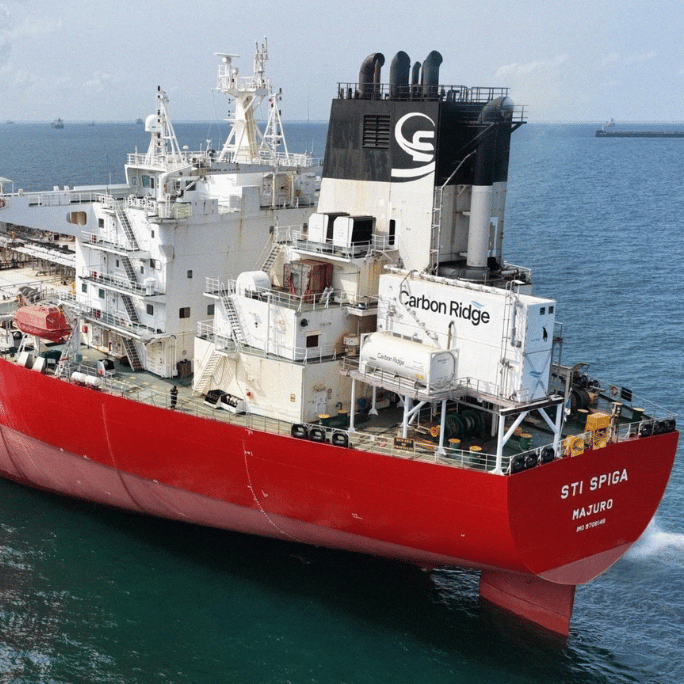
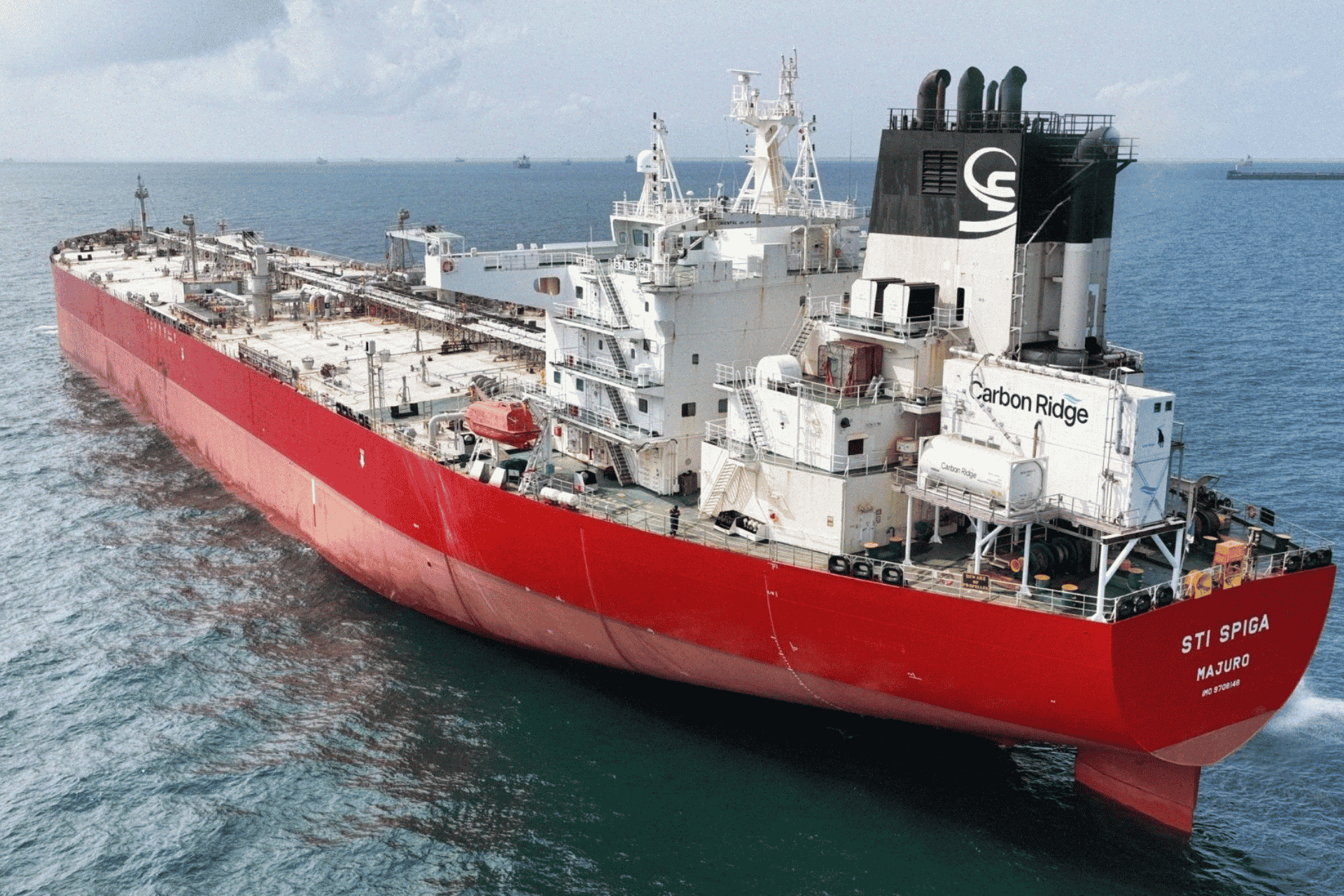
Onboard carbon capture moved from a pilot narrative toward first commercial deployments in 2025. Solvang installed a full-scale OCCS system on the Clipper Eris, targeting up to 70% CO₂ capture, while Carbon Ridge installed its first commercial centrifugal capture system, “Lone Ranger,” on Scorpio Tankers’ STI Spiga in mid-2025, achieving DNV-verified carbon capture rate of up to 98%. The sector’s core challenge is no longer the capture technology itself, but the end-to-end economics that surround the energy penalties of the system, onboard storage, port offloading, sequestration access, and monetizable carbon value. With anticipation that the IMO’s NetZero framework, delayed in 2025, will pass in 2026 or 2027, companies which can solve the logistic equation of OCCS seem poised for more rapid adoption.
This article is based on the market overview in Katapult Ocean’s 2025 Impact Report.
Download the 2025 Impact Report
.png)